








AYDA Awards

Join to be a part of the AYDA Community

Email
Asia Young Designer Awards
Nippon Paint

WELCOME!

The Asia Young Designer Awards is a platform to nurture and inspire design. Discover and unleash your potential today!

It looks like you are in Malaysia. If we got it wrong, please select your country.

Or select a different location

Loading...

Thank You for your interest!

Contact Us
Nippon Paint Asia Young Designer Awards

Location:

Banner Submission Closed
Voting Banner

Architectural Category

Discover design solutions that can positively impact your local communities. Your design can help solve the needs of the ever-declining nature, develop a strong connection between people and more.

Critical Architectural Elements for Consideration:

https://www.asiayoungdesignerawards.com.my/Innovation
Level of innovation and
integration of technology
https://www.asiayoungdesignerawards.com.my/Impact
Social and
cultural impact
https://www.asiayoungdesignerawards.com.my/Environment
Environmental footprint
and impact
https://www.asiayoungdesignerawards.com.my/Interaction
Human interactivity
https://www.asiayoungdesignerawards.com.my/Colour
Design aesthetics (inclusive
of colour and light theories)

Submission Criteria & Checklist

Theme

CONVERGE:
Embracing Hyperlocal

Project Category

Open category

Project Layout Size

Below 10 acres

Participants Requirements

Diploma Year 3 students and onwards.

Submission Limit

1 Project ONLY

Submission Requirements

  • Project title and theme/concept
  • Design concept statement
  • Presentation boards (A2 size)
  • Labelling the presentation boards
  • Perspective images
  • Photographs
  • Colours
See Detailed Requirements And Specifications
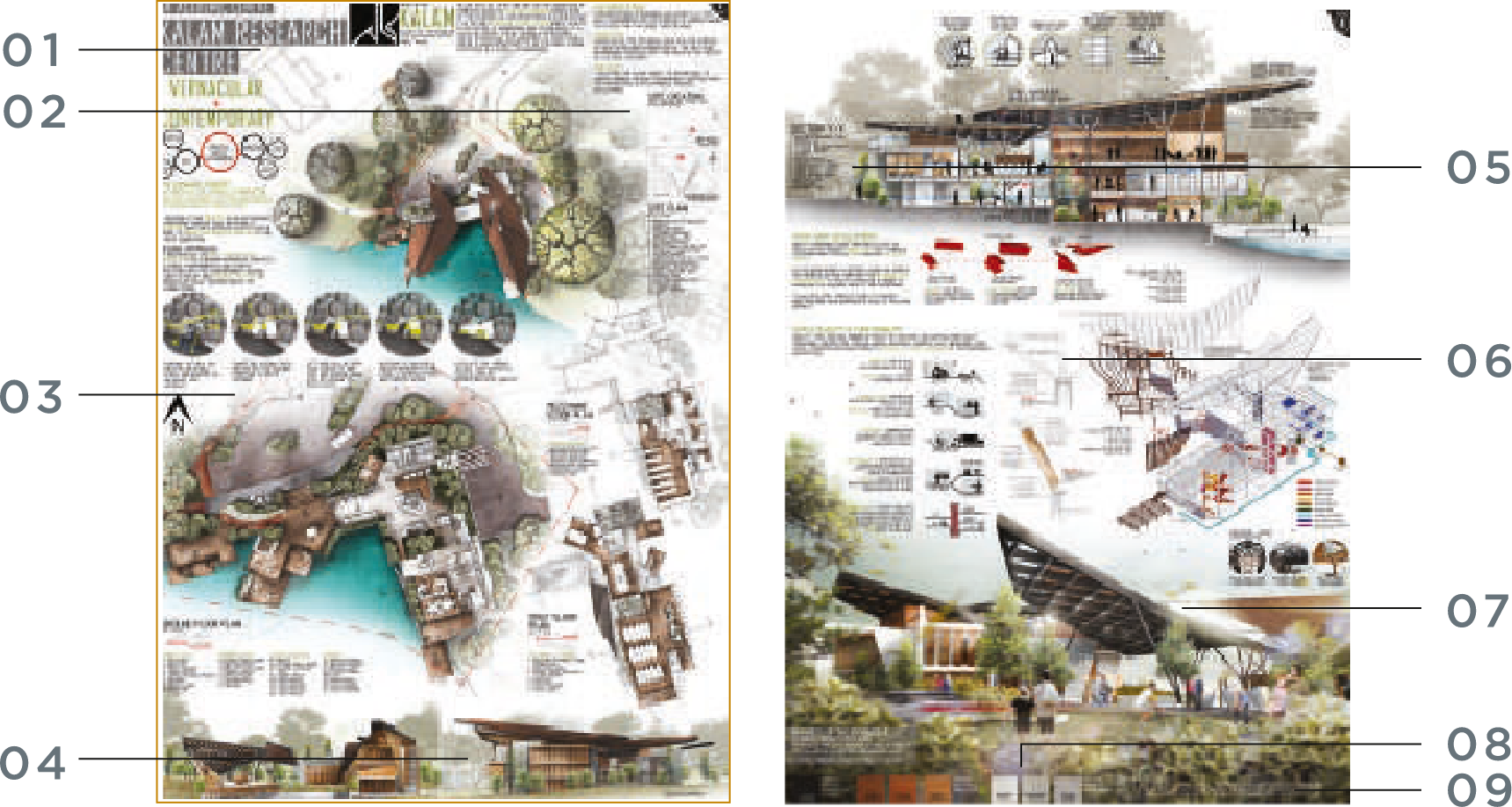
Sample Presentation Board
SAMPLE PRESENTATION BOARD - ARCHITECTURAL CATEGORY All entry submissions need to include existing site photos (if applicable).
  • Project profile
    • - Project name
    • - Project category
    • - Concept
  • Design statement.
  • Project plan and furniture layout plan.
  • Existing site photos
    (if applicable).
  • Project elevation.
  • Explanation of the green elements and green paint products used in the project.
  • Perspective of the project in 3D
    • - Students can label the perspectives accordingly.
  • Colour chips with the corresponding Nippon Paint colour codes and names.
  • Students should provide captions for selected perspectives to interpret the connection between the space and the concept.
Judging Criteria
1) DESIGN CONCEPT
25%
  • Ideas and designs reflect the essence of the Theme
  • Identifies clear and impactful project concepts and problem statements.
  • Displays effective and extensive research.
  • Demonstrates the ability to propose relevant and effective solutions to the design challenge.
  • Indicates critical thinking and problem-solving skills.
  • Originality, relevance and impact on users.
  • Suggested Questions to Ponder:
  • Does your design successfully fulfil an innate human need or solve a problem?
  • Does your design facilitate better functionality and purpose for its inhabitants or visitors on a human scale?
  • Is your design able to deliver and demonstrate commercial or social values?
  • Does your design reflect ergonomic and environmental principles that sustain physical well-being?
  • Does your design offer alternative perspectives and/or ways of solving problems?
2) FUNCTIONALITY & RELEVANCE
15%
  • Site and Spatial Planning/Sensitivity:
    The ability to deliver a layout plan which is sensitive to a specific context. The integration of appropriate design and planning of individual spaces needs to be tailored to the needs of users, with an emphasis on anthropometric and ergonomic principles.
  • Functionality:
    The Design is appropriate for its intended use and will create a positive impact for the community and users.
  • Design impact:
    Demonstrates significant impact on contemporary life and living environment; has strong social values and significance; actively contributes to the nurturing of the next generation and advancement of society as a whole.
  • Practicality:
    The design is suitable for delivery with materials and technology readily available on the market today.
  • Suggested Questions to Ponder:
  • Could your design be implemented using processes, materials and technologies available or in development today?
  • Is your design a versatile one that supports people, activities and change?
  • Does your design stand the test of time, from both an aesthetic and physical point of view?
3) DESIGN INNOVATION
20%
  • Displays a high level of originality and creativity.
  • Showcases the ability to deliver innovative and forward-driven interventions with the integration of technology.
  • Suggested Questions to Ponder:
  • Does your design maximise or leverage tech-enabled connectivity and/or intelligence?
  • Is your design original in its execution?
4) SUSTAINABILITY
15%
  • Demonstrates the capacity to support the needs of people and the environment in a long-term and impactful approach.(e.g. Demonstrates climate and energy responsiveness).
  • Displays effective thought process and the use of renewable resources and life cycle throughout thedevelopment and maintenance of the design.
  • Displays long-lasting design and universality.
  • Suggested Questions to Ponder:
  • Does your design incorporate sustainable and eco-friendly elements that help preserve the natural environment?
5) AESTHETIC, COLOUR USAGE AND VISUAL IMPACT
15%
  • Aesthetic and Visual Impact:
  • Design is aesthetically pleasing and effectively integrates social and cultural aspects for the users.
  • Place-making: Creates opportunities for users to interact with the space.
  • Colour Usage:
  • Showcases brilliant and creative use of colours.
  • Showcases a brilliant display of balance between colours, materials and design outputs.
  • Demonstrates the use of colour for the enhancement of materials and facades, etc.
6) DELIVERY & PRESENCE
10%
  • Presentation showcases a high level of clarity, creativity and interactivity.
  • Presentation is cohesive and demonstrates a high level of understanding of the design challenges and solutions presented, paired with appropriate visual aids, graphics, and/or animations.
  • Presentation focuses on both your project deliverables and design philosophy, including the journey and concept.
1) DESIGN CONCEPT
20%
  • Clarity of Design Intent: Does the concept have a clear and concise message?
  • Originality of Idea: Is the design concept unique and fresh?
  • Appropriateness to Site/Programme: Does the concept respond to the specific needs of the site and the programme requirements?
  • Overall Strength of Concept: Is the design concept well-developed and cohesive?
2) FUNCTIONALITY & RELEVANCE
15%
  • Space Planning and Flow: Does the design create a functional and efficient layout? Is the circulation clear and intuitive?
  • User Needs and Activities: Does the design effectively accommodate the needs and activities of the intended users?
3) DESIGN INNOVATION
20%
  • Creativity and Inventiveness: Does the concept have a clear and concise message? Does the design demonstrate a unique and innovative approach to problem-solving?
  • Integration of New Technologies: Does the design incorporate any new or emerging technologies in a thoughtful and effective way?
  • Pushing the Boundaries: Does the design challenge conventional ideas and push the boundaries of architectural and interior design?
  • Feasibility of Innovation: Is the innovative aspect of the design realistic and achievable within the project constraints?
4) SUSTAINABILITY
15%
  • Energy Efficiency: Does the design incorporate strategies to minimise energy consumption?
  • Material Selection: Does the design utilise sustainable and environmentally friendly materials?
  • Water Conservation: Does the design incorporate strategies to conserve water?
5) AESTHETIC, COLOUR USAGE & VISUAL IMPACT
15%
  • Overall Aesthetics: Is the design visually appealing and well-composed?
  • Effective Use of Colour: Does the colour scheme enhance the design concept and create a desired mood or atmosphere?
  • Visual Communication: Do the drawings, models, and presentations effectively communicate the design intent and aesthetic qualities?
6) DELIVERY AND PRESENCE
15%
  • Clarity and Organisation of Presentation: Are the drawings, models, and presentations clear, well-organised, and easy to understand?
  • Professional Quality of Presentation: Do the drawings, models, and presentations meet professional standards in terms of craftsmanship and execution?
  • Oral Presentation Skills: Can the student(s) effectively communicate their design concept and rationale during a presentation?
Judges
Ar. Datuk Tan Pei Ing
Principal
PI Architect
Ar. Adrianta Aziz
Architect & Educator
AR RAD Architects
Ar. Dr. Miguel A. Robles
Head of Architecture
Urban Agenda Design Sdn Bhd
Ar. Howie Lam
Design Director
TKCA Architects Sdn. Bhd.
Mr. Tan Swee Ee
Assistant General Manager, Property Development
IJM Land Berhad